Sunday, August 11, 2019

Old Cabin in the Woods

 Introduction

 Hello fellow history buffs. I know, this is only the 2nd article for 2019. Please continue to stop by, you never know when I will get to a few other long planned on posts. Whether you are new to this blog or you are an old loyal follower who have been impatiently hoping for more insight on Fayette/Westmoreland Forgotten History, I hope you are all fine and in good health.

   Although these photos go back quite some years hence, this was a draft that hadn't seen the light of day. One reason for that: a difficulty in discovering exactly who owned the site as it changed hands since many years ago when, even then, little was known of it. I'm not providing GPS coordinates as much because of the murky condition as concerns any  recent land owners and all that. The post is finally uploaded in the name of research and historical interest.

  All the info I have available is it is quite old, but how old, I do not know, and it was in the 'Rhodes', or 'Rhoads', family for many years. When I and my brothers were little greenhorns an old lady and before that, an old man lived there, deep in the woods on Walnut Hill in Upper Tyrone Township. There use to be a larger lane down into the woods where every so often the old couple had groceries and other items delivered to their area. Well, unfortunately that is about the extent of my boyhood memories of the place.

  Any aware of further information, be sure to contact me.


  I was just feeling cooped up, so I took a corner of an afternoon to check the Walnut Hill area referred to in a previous Histbuffer post. Briefly, this primarily concerned the Braddock Road and the Turkey Foot Road, dwelling at some length on the historic and fascinating likelihood they may of actually crossed on or near Walnut Hill in Upper Tyrone and bordering Bullskin township.

 Touch of Fieldwork


  To give a little explanation, I strode off the road for a bit of fieldwork and felt immediately better to be out in nature. Whether you are hunting, hiking or just taking a stroll, there's something about the solitude and simplicity of going it alone in the woods that can really lend toward an advancement of your peace of mind. And I don't mean scanning pages of woods and snow online to grab a nice screensaver, occasionally spacing out and sighing now and then. No, sorry, that doesn't count!

  I started on the top of the hill, (an obvious beginning or ending, depends on how you look at it), where there is a remnant of the path leding from it's joining to the modern Kingview Road. To the east, this old route appeared to make a connection on a few maps, modern overhead photos, as well as 1939 aerial photos, to join the Kingview Road again from a few hundred yards downhill toward the paved main road on the way to Rt. 119. I had plans to eventually finish with this region in a future article. There use to be a much clearer pathway, wider in size, but you will have to take my word on that. Please, do keep in mind, not many know of the route, excepting a few that lived here a fairly long time ago.


The path near the guard rail to the east at the top of the hill

   Soon I worked my way down into...thorn bushes. HUNDREDS of them! Pesky, innumerable, from all angles, and...sharp. So, I took it slow and hesitantly, followed the trail through there. It appears to branch, then is more difficult to perceive. Later, in a rise toward the south there are a few roads that are were probably mine or farm roads.

After approximately 40 yards the road appears to split

   I would suggest no one actually attempting to duplicate my trek, let alone bothering to go through the trees and thorns from Beauty and the Beast's enchanted castle and simply go by what is shown here. Heck, some might just get lost in there. After a few weeks they will probably find their way back out. Maybe they will of learned about wilderness survival and camping, even though they are a quarter mile from a main road! If you are an experienced woodsman, or woods woman, you might be alright, otherwise, even with a compass (that wasn't part of my few items), it is a bit of a maze. Anyway, a warning, as unless mountain climbing is one of your serious hobbies, no one should attempt heading in there at the pole line to the north of where I did as the descent is extremely steep and surely much worse with the mud and snow of winter. The one advantage was minus the snakes and bugs of warmer months.


A clearer piece of the upper, southward trail

   Specifically, meaning, the path along the high, southern ridge staying in the very thick underbrush, to the point you couldn't get a photo without using a machete, while the lower, more northerly branch heading off eventually toward the old cabin, while further on, a deep hollow that can be a dangerous if not carefully skirted around to the west.


The old cabin hasn't been lived in for many years

 The area I found it in, after so many years of where I was reminded that it was suppose to be, wasn't quite the place I expected to come across it's whereabouts. So, you might say, I was a bit disoriented or whatever, but the case remains it was further up the hill than I had anticipated. No, I'm not perfect, let's put it nicely, shall we? But, I wasn't quite lost either..

 Again, no one I know of seems to be aware who exactly owns the old property these days. No harm was meant. Of course, not all that long ago one could freely hike these woods. No hunting or ulterior purposes were involved. If an objection arises to this post, and will do my best to respect the wishes of the owners as has been done to this point.


  The cabin, last used by an old couple by the name of Rhodes, or Rhoads, was to the last inhabited by the woman until her last days. By the way, if a Mr. Hall(?), or whatever the name is on a few old postings, I didn't see any other until meandering well past the cabin location and am an innocent guy who generally minds his own business, alright? The old landowner around these parts was a friendly man who had no qualms about traversing the hillside. I also saw no other person on my journey through some of the woodlands. Thank you.


   I was rather surprised to see that it did have electricity back in the day!


  The place is very deteriorated. Because the ceiling is fallen, there was no temptation to go inside. There was wood and junk under the floorboards.


  The well was still there, though I was stepping a bit gingerly.


  I followed one pathway until it was difficult to be certain of it's whereabouts.Then I caught pieces of a path or road off and on through to another, more easterly ridge. That's where I saw a few postings. Keep away, you are NOT wanted here! So, I did just that which changed the trajectory of my quest to going in farther down Walnut Hill and walking up in a ways. I noticed what appears to be a scar or trace in the cornfield. This looked interesting. It is easier to perceive and more noticeable in three dimensions from various angles. Here's a photo:


 Later on, I met a man at his residence coming home from work and realizing that I didn't have much daylight left OR permission, I promptly asked him about the road entering the woods back behind the houses. He told me he had only lived there for ten years, doesn't know the ownership situation but pointed out a house where some elderly people live that might have more knowledge. Quickly, it hit me, I know those people! One of them, Dolores Mailik, I had been in the Laurel Art Club with back in the 1990's. Yet, I decided not to bother these folks too much. So I put off any re-acquaintances until maybe a time when I was cleaned up and more presentable to ask if they know if it is alright I check the road down there for a pace or two, as it could be indicative of a clearer perspective of how this road originated.


 What concerned me most is the lack of rutting in the old road in those woods, as much as I could discern anyway. Such is often a feature of the Turkey Foot Road or the Braddock Road remnants amid steep terrain.There are logging or farm roads on the hill as well, but the importance and significance is not known to me.

  Yes, ladies and gentlemen, the jury is still out, and may never convene on how much importance can be gleaned from our limited observations and lack of knowledge, which includes understanding of carpentry and building acumen. In general, these photos and a bit of familiarity with the lay of the overgrown hills and hollows is all I acquired by my rambling camera trek in the heart of February, a lot of years ago. Nevertheless, I felt relieved to of once again seen some of this first hand. In fact, I enjoyed the small excursion for what it was:

 a minor attempt to learn something more of the Turkey Foot Road through this particular region and a chance to get out from a case of cabin fever and check out an old dilapidated  cabin of a different sort. Underlying this, is the real possibility the TFR route went further down toward the northeast around Kingview. The jury hasn't yet been formed to convene on such an alternate course as that, with the basic deduction of very little to go on for now.

  As always, keep the emails and comments coming, they can be the life blood of a good old blog, and are truly appreciated! As for my recent lack of posts, priorities are what they are, so I will leave it at that. Take care, enjoy the rest of the summer, and I'll be back (some day!), for another excursion into our regional history on the next post, folks!
 

Thursday, May 23, 2019

Braddock's Battlefield History Center

   Well, is this a surprise to anybody? 

   The fact is, this particular spring is a good time to be back from the semi-sabbatical I chose to take, though it wasn't neatly planned out. In spite of promises in the past, you may of noted back on the post from 3-25-18, there were a few problematic concerns and issues as well, some of which still remain in effect. Regardless of my reasons, part of the fast moving, last half a year was simply spent in alternate work and differing research. 

   Braddock Battlefield History Center


   Located in the Mon Valley, 7 miles east of Pittsburgh, the small, but important museum was built in North Braddock, an old steel town  the 1980's steel crisis, itself embattled from labor union disputes, an area of toiling, striking miners and lost prosperity. The sad result: Braddock was slowly abandoned by 90 percent of its population. After all, this was the region of the Battle of Homestead, or Homestead Strike from July 1 - July 6, 1892. 

   Not far from the amusement parks of Kennywood and Sandcastle, which can now be reached by the Parkway East and local bus routes, the steel workers and private security forces of Pinkerton agents clashed violently under the direction of the absent owner, Andrew Carnegie and under the direct supervision of the disliked, reactionary coal boss, Henry Clay Frick. The defeat for unionization and setback led to the steel strike of 1919.

   The Center was created by a caring individual named Robert Messner, originally opening its doors on August 18, 2012. The grand purpose was to provide needful information in honor of the Battle of the Monongahela of July 9, 1755, in which General Edward Braddock led the British and American troops from Cumberland, Maryland via the famous 1755 Braddock Road to Braddock's Field in western Allegheny County to attack Fort Duquesne. The occasion and the building of the road is still justly celebrated in various places. There the British were seriously defeated by ambush by the French and Indian (Native American) forces in crossing the river. As the initial loss became a huge victory under the efforts of General John Forbes and Colonel Bouquet in 1758 with the taking of what soon became Fort Pitt at the confluence of the Monongahela and Allegeny rivers, and the lasting achievement at the Battle of Bushy Run in 1763, so the town of Braddock has hopes of recovering some day soon from its heavy losses and working toward a brighter future and job growth helping to resettle the old place anew.

    Reopening


   The good news to repeat here:

   The Braddock Battlefield History Center at will be reopening on May 25. On December 28, 2018, the new stewardship was implemented by Fort Ligonier, in nearby Westmoreland County, (a great historical spot I revisited in the fall of 2018, but that is another story!). The curator is Erica Nuckles, while the address is 609 6th Street, Braddock, Pa 15104. Regular hours are 11 AM to 4 PM, but the museum opens this Saturday at 12:00 noon.

   Maybe this article will encourage other interested 'history buffers' to acquaint yourselves in the fine collections of relics, artifacts, paintings and coins available, while checking out their video room, maps and some 'on loan' items.

  NOTE:

   I sincerely hope visitors, new and old, will back me with enthusiasm in the delivery of NEW posts previously planned that continue the "Fayette/Westmoreland Forgotten History" tradition afresh with further material adding to our exciting discoveries. Thanks for the patronage!


Tuesday, October 16, 2018

A Presiding Commander of Ellsworth Post

   I hope all you 'guys' are doing fine. I haven't so much been taking any kind of a 'sabbatical' from the blog. Simply, my efforts and services are often required elsewhere. I'm getting along alright, thank you. Yet, between willpower, actual plans, and real time devotion to the blog have seen a small tug of war when it comes to the 'nitty gritty' of creating fresh quality articles in a timely manner. Don't worry, "Fayette/Westmoreland Forgotten History" as a blog, still exists. Thanks for your continuing patronage!

  
 Prologue and Description 

   Now, as a small foreword, it might be best if this blog is not overly long, because I would not want to bog people down too much with a lot of details on this subject too many more times. Keeping that perspective in mind might add to the interest of this type of material, yet this does border on a unique episode of military history, folks so it is well padded with historical data regardless.

     The truth is, this idea was planned as another addition to the Relatives and Ancestors series. On second thought, the decision was made for the material to go beyond basic family genealogy with a deeper meaning of a revealing historical context than just about my relatives.

   While poking around the internet a while back, I came across some fascinating information on a Presiding Officer for Colonel Ellsworth Post of the Civil War. "The Proceedings of the Annual Encampment of The Grand Army of the Republic" in various numbered volumes was a major source of information. Now, you can probably imagine that I hardly expected to locate something personal of such a caliber in this manner. Only a sense of curiosity and a touch of presentiment caused me to search it out. Just an idea, really. I became thoroughly delighted to of made such a surprise discovery, however piecemeal it was at first glance.

    These Reunions were held at, and behind the old Steiner roller rink which was a park which land was bought up for that specific purpose in the late 1880's. Indeed, it was used for other purposes: company picnics and various clubs, just to name a few,

    Colonel Elmer Ellsworth

                                                 
Colonel Ellsworth, courtesy of the Scottdale Historical Society

      Ephraim Elmer Ellsworth was a popular figure. He was a colonel of the Chicago National Guard Cadets and worked with the New York City firemen. He studied law under Lincoln in Springfield, Illinois, and helped organize his 1860 presidential bid. The colonel also became a competent officer, and close friend of Abraham Lincoln. 

       The story goes that while looking out the window at the White house near the beginning of the Civil War between the American states, the President sternly noted to Ellsworth the 'Stars and Bars' flag freely flying across the Potomac River. On the morning of May 24, 1861, under the direction of General Scott, after disembarking from one of the steamers, Ellsworth, the founder of the 11th New York Infantry Regiment, with little resistance from a retreating force, headed up into the Marshall House hotel in Alexandria, in the Commonwealth of old Virginia, which became an independent city. With a few of his men, he proceeded boldly upstairs, grabbing the offending Confederate flag from the roof top and began rolling it up. On returning downstairs he was suddenly confronted by the secessionist landlord, James Jackson, who claimed he was 'a boarder.' Jackson quickly let the colonel have it with the roar of a shotgun in the chest. Abruptly, on this encounter, Jackson was immediately shot dead.

       As can be imagined, Abraham Lincoln was saddened and almost inconsolable. Colonel Ellsworth had the distinction of being the first casualty of the Civil War. Lincoln had the favorite officer laid out properly in the East Room for the funeral.

      "Remember Ellsworth!" was soon a Union rallying cry! Various places, towns and military posts were named after him in his honor. This was indeed the case with a special one in Scottdale, East Huntington township of Westmoreland County, Pennsylvania.


 Ellsworth Park

     A Sept. 7, 1887 article in the Daily Courier maybe allows the best gist of what the early encampments were like to actually experience. The writer relates that The Grand Army posts of Dunbar, Uniontown, Dawson, Stonerville (or Alverton), Springfield,  Connellsville and Greensburg were their in full regalia; in all, 1,000 of these men showed up at the Scottdale post starting on Thursday evening, culminating where "Old Veterans Play Soldier." This was , of course, aat Camp Ellsworth, Post 209, or, as specifically  termed, 'Ellsworth Park' in Brown's Grove, (later called, Browntown by the locals), just north of the main thoroughfares of Scottdale. The Scottdale historical Society may be interedted in this story. I haven't gotten around to informing them or learning of thier opinion on these matter so far.


       They would tend to kick things off with a parade from the 'handsomely decorated' town with 'a large and enthusiastic crowd' to the site that at one time was over 8 acres, where the Everson Drum Corp was in attendance playing 'old time martial music'.  There was set up a little village of tents in the woodland and everything was arranged for field duty in as realistic a manner as possible. Next up, all were regaled by lots of song and speakers, They probably then built up the bonfires, though it doesn't come right out and say so. On Friday afternoon, a 'sham battle' was displayed for the 'entertainment' of everyone present. No one was hurt, but the powder burnt 'was fearful to contemplate'.

     This was followed at the gathering by a rousing address from a United Presbyterian minister of Scottdale at precisely 8 p. m. By Saturday, there was estimated to be 10,000 visitors, many of them old vets arriving by train from Mount Pleasant, Latrobe and Irwin to witness the great spectacle and, one would suppose, take refreshments. At noon dinner was served, this must have been a lot of industrious work for the ladies involved in cooking and the clean up would surely of been something else - there were more speakers, colonels and generals and parades by various regimental companies. Then, another reenactment took place. Sunday saw more grand dress parades and religious services watched and admired by the many civilians crowding the camp grounds. Thus following, another sham battle between the infantry, cavalry and the artillery; not without a few wound that were only all too real. These events must certainly of been a wondrous sight, eh folks? Here, here. They finally broke camp late Tuesday night to end the festivities and their fellow citizens heartily enjoyed the whole endeavor and were thanked for their hospitality one would assume with civil decorum while the reception of the vets were highly appreciated as well.


Overhead view of Ellsworth Park from the 1930's.


Annual Encampments

    Enter: My great, great grandfather. I already knew part of his unique story and sever wounding in the Civil War and his service at Gettysburg. Now there was more to learn and more to tell.

   The first of these Annual Encampments began in 1888. Of course, my main point remains with James Wilson's connection to the G A R, but no attempt is being made to necessarily ignore other aspects of the gatherings or those other worthy high officials involved except to not let the size of my post expand greatly beyond original intentions.

     I had more material taken from older research I am looking around for indicating the old veteran's overriding presence on years between 1905 and 1910. Still, as an actual example, James Martin Wilson of Wooddale, Fayette County, was indeed Ellsworth Post Commander in 1913 for Scottdale No. 209 and for the Sons of Veterans, according to The Daily Courier, Wednesday, May 21, of that year and in other years too.

    Below is a record of the Annual Encampment from the year 1914 with James Martin Wilson as the Post Commander for Col. Ellsworth Post 209 Grand Army of the Republic for that year located in the middle:


       The exact manner in which my, g, great grandfather came to this high position, I know not. His personal story, of a serious wound through the throat that he wasn't at first aware of through the effects of shock, into which was run a handkerchief to keep out the maggots that would infect the wound, is true and one of the rare family traditions we have of him. This is certainly a grisly one which may of had a grip on others with the added gift of storytelling. Otherwise, not much else is sure at this late date. But, he must of had the presence, influence and some charm to be awarded such an honor in those times. This was a very serious event and an important experience to represent the 'Grand Army' the way he did. I am proud to note, he also headed up the Memorial Services for Decoration Day at the Mount Olive United Brethren Church of which he was an early member, as was his son, Shed and grandson, Meryl Wilson. He held the illustrious title of Post Commander for at least four years in the early years of the twentieth century as well: those years with documentation are 1912-1915. I believe I've ran across one or two other earlier years as well. It is unfortunate locating again a portion of the exact proof was one big reason this blog post was so long in seeing the light of day. I trust enough evidence is scattered around in here to reasonably allow for the case to be well made.

                                                   
Comrade James Wilson


    The duties of this particular leadership role were fairly impressive: keeping an eye on entertainment, helping with guests, coordinating events, while having superior charge of the whole encampment under their supervision and were engaged with most activities and personally involved the direction of the various concerns of the GAR eight-acre grove while making impressive, moving speeches. This was not something given out lightly to the military or to the public at large!

     At one time, and I'm not positive how often, the surrounding posts, such as Dunbar, Dawson, Springfield, and even Connellsville also sometimes also encamped here, at least for a weekend in certain years. The important festivities would begin at 7:30 p. m. on Thursday evening. These often took place in late August and early September, but not always. I haven't followed the earlier years in too much depth.

    James Wilson also traveled around occasionally for the National Encampments. One example could suffice. For the annual Convention of the Department of Kansas, Womens Relief Corps, he attended as Secretary representing Ellsworth Post:


 In creating an article in honor of my great, great grandfather, James Martin Wilson,  I personally know very little about him. It may be supposed the man has the appearance of a basically unassuming person of average proportions, yet there was more to him than that. Naturally, I am very proud to have access to what is available and of his particular commitment and serious dedication in the Civil War and beyond. The different reenactments in Westmoreland and Fayette counties here in southwestern PA must have been quite exciting events for the old timers and the observers as well. He saw action at the battlefields in numerous sites which include Gettysburg.


    James had the distinction of being a one time Constable of Bullskin Township of Fayette County, Pa., in the year, 1873 which I will get back to in a moment or two. One more thing, clicking the 'relatives' or 'Wilson' links on the sidebar of the blog will provide further information for the subject if visitors will just scroll down.

    We do know that this ancestor use to hold family reunions at various place, at least one being at the Mount Vernon Park. He was married to Louise Grimm, (my g, great grandmother, of course), and rather conveniently, her family lived right across from him on the Shenandoah Road near the corner of Breakneck. The James Wilson farm was on the side where Woods' greenhouse recently was in business. I wish I could add an old photo of the old homestead, but if such exists, my side of the family have no knowledge of it. I heard there was once a photo of James Wilson in his Union uniform. We haven't had the proof to substantiate this tradition as of yet.

     From what info I could gather, and some of that is speculative to the extent it has not been completely confirmed, the situation of ancestry appears that James (2) was the son of James Wilson (1) and Elizabeth McBrady. Now, that James' parents were William and Catherine Wilson. He, himself, was born in 1819, in Hornellsville, Pa and got married and later died in Fayette County, in 1903. I recently discovered some likelihood these Wilson's were related to those of Dunbar. Continuing in this vein, it appears that the earlier James' immediate children, and therefore my g, great grandpap's siblings, would have been born in this order : Anna, Alexander, Martin, Joseph, Daniel, William, James, who lived in Connellsville, (which fits in with my g, g, grandfather), Charles, and Minnie, who died in infancy.

     James was even known to host the occasional picnic st his residence for the Grand Army veterans as can be observed below from a newspaper article for July 30, 1907:


     If that wasn't enough, there is more about James Wilson as Post Commander for the year 1913 at Ellsworth Post in another article, while here is this particular reference for a memorial churchservice for that year:

    I just discovered an old note that proved James was also the Post Commander of Ellsworth Post for 1912. If I find time I will try to upload this and possibly others. However, hopefully, you all get the idea behind this part of his life.

 More Historical Information:


   In 1873, about a decade after his services and traumatic experienced of the Civil War, James M. Wilson was elected a Constable of Bullskin Township. The exact job description...


    As can be noted by this page from an old history book, John Miner appears to of been the Justice of the Peace during James Wilson's constabulary watch. Justice Miner became  an ancestor of future generations of the Wilson family by the occurrence of his daughter marrying George Hatfield. George was the grandfather of a lady whom James Wilson's son, Shed Wilson, had married, one Mary Miner Wilson. John Miner Jr, was one of the more prominent men of his community, but maybe more information should be related in a proper post. Although, I find that certain details have remained a bit sketchy, there really are many extra details involved, and some of these are not posted on previous Relatives and Ancestor posts of past 'Fayette/Westmoreland Forgotten History' articles for the simple reason that they were not known then.

     If the subject of the military posts interests you a lot, included in 'Snowy Stroll Through Scottdale', is some added material on Ellsworth Post.

    There is a statue to Colonel Ellsworth in Mechanicville from the unveiling of May, 1874. There is none to James Martin Wilson. None, except those we make of in our hearts - a living monument. As written on the colonel's gilded granite, a note he wrote just previously to his dear mother:

      "I am content, confident that he who noteth even the fall of a sparrow, will have some purpose even in the fate of one like me"
                   

Tuesday, July 24, 2018

Inflation Alert: Huge Price Changes

This ad from Chinn's gives a fair idea of prices in the olden time.


   Folks, we all know plenty about the rising prices which has been going on for a long, long time. Whether it's gasoline or other fuel sources, the exorbitant  expense of purchasing a new car, or commodities and general products we buy almost everyday, inflation actually only appears to continue to go sky high.There were eras when it was much worse!

   Many of us remember the retailers, like for instance,  Montgomery Ward, while we still have a couple in existence in J. C. Penny and Sears, but things are very different and more's the pity as the manufacture of many products have long since left our shores and quality has tended to deteriorate over the years. So here is a handful of examples from way back in the day, so to speak.
    
   As far as the causes of inflation and its influences, this is an economic issue concerned with the increase (or decrease) in price levels of consumer goods while experiencing a reduction in purchasing value. This is caused by various factors.

    Regardless of the meaningful details (which can be difficult to understand), we are not using this space to go into all the technicalities here. The main idea on our post is to have a bit of entertainment with some educational info included as we take a gander over our modern shoulders back at what items use to cost in the 'good old days'.

   Hey, let me know if you enjoy these!


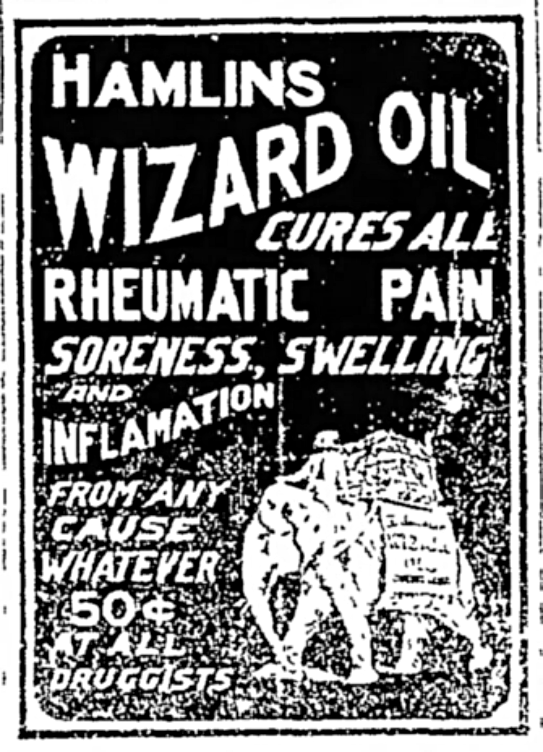
             This tempting concoction probably easily bypassed the Medical Board in 1903:


From the Mervis Company comes -the "CONGOWALL"!


                Now, I have collected a lot of these for many types of products. Perhaps, if you give me a hint, I will consider posting another batch in the future. Is that a deal?              

    
                OK...


  We have a few advertisements on food produce displayed below:


   I missed the year for this one, but it was surely long ago when there use to be a market by this name on 'old 119' near Pennsville selling a bushel of peaches at these prices.


          These was also a Nut Shop on the corner of Pittsburgh St. on the right at the second red light in Scottdale.          


               Above is a good smattering of prices for Acme Super Markets from the year, 1945.

               I don't know about the rest of you, but I suddenly feel like doing some serious grocery shopping. Lol.


    From the Connellsville Bottling Works provided the one below. Does anyone remember 'Spur'?  Apparently it was just about as good as Canada Dry.


  Those high priced fancy women's hats!


           When's the last time you heard of prices resembling that for a train trip out east to do a bit of gambling? The ad is from July 10, 1931.


 Reasonable cost. AND, as most locals know, the store is still in existence.                                 

                       This one is for Frisbees, 1890:

H'mmm, a couple of bucks for a shot gun -what times!
                                                           

   Next up is from the late 1950's. The brothers were still there in the 1970's, anyway. I have fond memories of my parents taking us to the experts at Simon's in Mount Pleasant from the 60's and 70's.               


                            Who needs a new fridge -come one, come all:


                    Nothing like an inexpensive car, eh?


A company from the 1940's.


                  Some of you will recall the well known store, Gatling's. This ad is from 1949:


A good, dependable store. Ad is from 1959.


          Here is a vintage ice cream ad from December 2, 1926:                               
           Hagan was a popular, high quality local brand originating from this region.


A personal ad placed in the Courier on June 4, 1931.
                                                          
                                                             
                We all know of the Tums company, but back then people ate them "like candy"!
                                
                                                               
This shoe ad is from 1936.


Many of us remember this standby. Ad from 1971.
   The above ad brings back the days when my friends and I use to go have coffee and dessert down at the mall in the 1970's. I don't think I tried the fish, but some good, simple times, folks.

                                                                       
A 1939 advertisement for cheap wallpaper.

                                                    
                        Indeed, there use to be a clothing store or three in Scottdale, long ago:


An old Pepsi ad from 1936.


And to be fair, a Coca-Cola ad from the same year.
   
                                                                    
    Another Nut Shop ad for Scottdale's version from 1946. Mmmm..

                                     
   We all wish tires could be discounted for these prices once more:                             


              Lots for sale from way back in the day:     


Imagine a chance to purchase some of this furniture?!


      A special hats off to The Daily Courier, the newspaper which handled many of these ads along with a whole slew of other ones stretching back past the 1900's.
                           
    Please do let me know which tickled your fancy and any comments about other products that struck your memory when you were much younger are more than welcome. Yes, I'll be glad to read your responses and more of your personal memories and observations. Those youthful blog followers that have no recollections about them or these stores can get an idea just how much your pocket change was once worth too!                         

Contact Form

Name

Email *

Message *