Showing posts with label Whiskey Mania. Show all posts

Wednesday, September 6, 2017

Gallavanting In Greensburg

   Welcome back to F/WFH for another installment. In the post below we will be concerning ourselves with the basic structure of the history of Greensburg, located in Westmoreland County in the Laurel Highlands of southwestern Pennsylvania.

   A county seat of this magnitude holds so much voluminous and detailed historical matter in so many areas: sports, architecture, government, churches, activities, stores, cemeteries, schools, and many noted figures, such as distinctive and important industrialists, the form of a condensed outline has been chosen as most convenient while hopefully managing to provide a basic assessment of a special place that has been neglected to this point.


     Newtown and Jacktown

  The origins of this city began not long after the destruction of the original county seat, Hannastown, the first west of the Allegheny Mountains established in 1773 by Robert Hanna. Such concerned the site of the famous Hanna's Town Resolves of 1775 in many ways mirroring the soon to arrive,  Declaration of Independence to defend their God given rights against the oppression of the British. The event of the unfortunate loss of the town was accomplished in 1782 by Guyasuta and the Seneca Indians along with the French Canadians. After much bickering between other regions as well, by 1785 "Newtown" became the new county seat. The next year saw the building of the original Westmoreland County Courthouse in what is the heart of the Greensburg Downtown Historic District.

    The decision-making process of those times took much foresight and care in choosing the exact whereabouts of a new county capital; indeed, exposure to the elements, dangerous or hostile situations or indigenous tribes,  river commerce, quality of woodland and soil, popularity or lack of by citizens of the surrounding community, the keen ideas of investors, prior settlements, even scenery, and many more issues need be addressed and soon resolved; ideally, in the favor of the majority. The nearness of Fort Ligonier as well as the Forbes Road and Glades Path would surely be an example of two major factors in leaning hard toward this favored spot. The fact that by 1786 there were four taverns with capabilities of good provisioning and the comfort of an inn or two, certainly helped, though there were other factors in choosing this county seat as well: mainly that newly appointed commissioners, Benjamin Davis, Hugh Martin and Michael Rugh lived on or very near to the Forbes Road having a personal interest leading to the decision.

    By the year 1799, Jedidiah Morse in the American Gazeteer, described the city thus: "Greensburg, a post town and the capital of Westmoreland County, Pennsylvania. It is a neat, pretty town situate on a branch of Sewickly Creek which empties into Youghiagany River. Here are one hundred dwelling houses, a German Calvanist Church, a brick Court House and stone jail." In the days of wagons, moving families, stage coaches, and soon - to - come toll houses, you needed an insular place of worship for the faithful and it was a must in being able to lock up the thieves and rowdies.

  From the humble beginnings near the ending of the Revolutionary War of an inn built near an old wagon trail; this old road later became known as Penn Avenue. Early in its long history, Christopher Truby was the main founder of ol' Newtown, named after the count seat of his former home he emigrated from by 1772, Bucks County. In the early 1800's this was known as the Greensburg or Pittsburg Pike, a toll road completed in 1818. It slowly took on prominence after much debate and was accepted as the new county seat. This proud city was named after Major General Nathaniel Greene of the Continental Army in the Revolutionary War. The old jail was the corner of Pittsburgh Street and Pennsylvania Avenue. Most of the area north of Pittsburgh Street and west of Penn., Avenue were owned by Ludwig Otterman. Dutch Town was the section from West Pittsburgh Street to Vannear Avenue and Irish Town was further on the eastern hill of Pittsburgh Street.

 A sad reality concerns the sidewalk of the future courthouse site containing the market house which was also used as an auction block for the sale of slaves. This was finally dismantled by 1854.

 One of the busiest of the toll gates in Greensburg was on top of Chestnut Ridge between the city and Stoyestown at least from the 1820's through the 1830's with over 38,000 horses bustling through in the first year alone .


  Insurrection

  There were many areas of southwestern Pennsylvania deeply involved in the Whiskey Rebellion, including Pittsburgh, yet here were many distillers in many parts of the city of Greensburg, possibly the most toward Hempfield Township, which issues of this sort surrounded and inflamed. . That being the case, it is interesting to read that in a September Term of Court for 1795 various persons were tried on an indictment for a riot committed the year before, "in besitting the doors and windows and of the house of Simon Drum  in the town of Greensburgh, throwing stones etc. at the doors and windows with intent to beat, wound, tar and feather and evilly entreat Jaspar Yeates and William Bradford, Comissioners on the part of the United States, and Thomas McKean and William Irwin, Commissioners on the part of the State of Pennsylvania, to confer with thew citizens west of the mountains." According to the PA Archives, most were convicted, but first were deposited in the gaol and later 'exhibited' to the town, being marched through the town in the thick mud. These guys were later pardoned by Governor Mifflin. Maybe the shame of slogging around the streets continually was thought enough punishment.

  The militia leader and one of the major founders of the city, William Jack, had written to the governor that many of the people were adverse to the duty on spirits and basically proceeded to blame the Germans to an extent that they were extremely unwilling in the process and this appeared because they were ignorant of the language.


The Westmoreland County Courthouse on Main Street.

                                             
    The Westmoreland County Courthouse sits on Main Street, approaching near the top of the hill. It stands 175 feet and is the fourth courthouse, built in 1906 and designed by architect, William S. Kaufman, who was, coincidentally, born to Pennsylvania native parents. The oldest courthouse was, first, a log structure built from 1786 or 1787, depends on what is your source material, and the next was demolished in 1854, followed by the third, demolished in 1901.

   
   What may surprise many, in those much freer times, advertisements were made in the local papers to gather at the courthouse of the early 1800's to partake in meetings of various 'divine services' and preachers let loose with the sermons and preaching of reverends such as, James Estep, William M'Kindrey and Curtis Clay. So much for the modern notion of the separation of church and state!


                           General Nathanael Greene

                                            
Nathanael Greene, by C. W. Peale

    Born in Potowomut, Phode Island, where he became a statesman in the early 1770's and a member of the Kentish Guards, Nathanael Greene, (July 27, 1742-June 19, 1786), the illustrious  and prominent Revolutionary hero the General Greene Hotel was once named after near the turn of the last century, was the man Greensburg, Pennsylvania,  as well as Greene County, is so aptly settled on for its moniker. He was descended from Quaker Immigrants ho left Salisbury, England in 1635 for the New World. On arriving in Boston  by May of 1775, he was quickly made a Brigadier-General by June. He soon transformed from an initial defeat and loss through inexperience of Fort Washington on the banks of the Hudson to an endearing force lasting for eight years of service. In spite of the disrespect from Congress of his humble beginnings, his fame was abiding, service broad, and his loyalty deep. Greene reportedly died of sunstroke when his life was cut short at his Georgia home of Mulberry Grove, north of Savannah, though there may of been other complications from ailments such as asthma.

    As Alexander Hamilton stated it best at a Fourth of July, 1789 Eulogium on the death of the Major- General of the Continental Army, "To commemorate the talents, virtues, and exploits of great and good men... We seem to appropriate to ourselves the good they have done, to take a personal interest in the glory they have acquired, and to share in the very praise we bestow." He goes on to recall his exertions at Trenton, Princeton, Brandywine, Monmouth, Springfield, and tough battles as at Guilford Courthouse, Greensboro, North Carolina the import of his last command in the south; he goes on to demonstrate "that he was an accomplished master in the science of military command." With Morgan's genuine experience and tactics, while describing some of the more minor players, which, though Hamilton doesn't dwell on it for long, included the brave provisional militias of Marion, Sumter and Pickens and the factors of their enduring harassment of British troops in South Carolina, Hamilton gives worthy tribute to the deliverance of Greene's overall actions in Cornwallis's retreat to Charleston and on to Yorktown. By the way, some of this information and other details about the county seat of Westmoreland County has been related on the post "Origins of the Counties of southwestern PA.

    General Cornwallis once made the claim that,

   "Greene is more dangerous than Washington. I never feel secure when encamped in his neighborhood."

       
Old photo of Greensburg. The year is uncertain.


Into The Modern Era

    Like many of the cities,  towns and hamlets of the surrounding region, for various economic reasons, particularly the final closing of Greengate Mall in 2001, which was begun with so many quality stores in 1965, (not so in recent times), with the loss of Horne's and then Montgomery Ward. Soon we had the opening of the Westmoreland Mall in 1977 to help forget! But, if you are a near native of the region and old enough, like myself, you probably hold a few fond memories of visiting The Bon Ton, Waldenbooks, G.C. Murphy's, Spencer Gifts, Sweet Williams and RadioShack, among others, or just roaming the aisles with my brothers in the 1970's; this was THE cool place to go and to be seen! Some of these stores still exist in other neighborhoods or in other forms, under different names.


    Seton Hill College was a women's college. It was founded in 1885 by the Sisters of Charity. Now known as Seton HIll University, it has been coed since 2002, being closely involved in mobile information technology, health and the natural sciences and visual and performing arts. It provides a dynamic campus atmosphere. The University of Pitt-Greensburg is a state related regional institution first established in 1963 and was voted the "Best University in the Region" eight straight years. The Bobcats are the athletic teams and they also engage the Ben Franklin Society. Originally located across from St. Clair Park, it is now two miles to the south in Hempfield Township and with 22 buildings on a space of 219 acres the university can indeed boast of much academic achievement. By the way, there are many schools and cultural landmarks which I won't be going into here.

     Don't let the above statement bother you much - the athletic and sports history of the city and nearby environs would deserve a post of their own. Even the healthcare industry is to be highly enumerated. No, I'm not going to get started on all that, sorry.


      Arthur St. Clair

                                                    
Arthur St. Clair Monument

    Now we are taking a brief step back to the old days for a paragraph or so as I feel something needs to be related about St. Clair Park. Early on, it was moved to its present location toward the east, yet holds the statue and tomb of a notable figure in Arthur St. Clair. This Revolutionary General, a true patriot of the State of Pennsylvanian with much service and accumulated merit that later became a local here, was covered with much other material over three years gone by in a 2014 post providing a more in depth biography of this sometime hero, sometimes crticized man.

    While St. Clair's various war efforts in serving his country should of brought with him a certain celebrity he lived in nearby Youngwood under the sad distress of many difficulties while retiring in the County of Westmoreland.  He accumulating large debts and had to sell much of his property,  ending up as a tavern keeper.


     The city has surely taken renewed pride in the fact that a unique statue of Nathanael Greene by Chris Fagan was unveiled in the year 2000. He sstands, symbolically, all in bronze, in the depths of  St. Clair Park.


     The city is made up of eight wards, one of which, 'Bunker Hill' was actually named for the rowdy, wild fights at the Bushfields Tavern of the mid- nineteenth century, said to remind the surrounding folks of the Battle of Bunker Hill. Yep, so they say.

    Back in 1905, three neighborhood boroughs were absorbed into the county seat. These were: Ludwick, of East Greensburg, Paradise, of Southeast Greensburg, and Kinderhook to the north which includes the neighborhoods of Academy Hill, Country Club Meadows, Evergreen Hill, Saybrook Village, etc.

    Greensburg Station, back behind the courthouse, once served heavily by the Pennsylvania Railroad when opened in 1912, while PennDot's last servicing pretty much came to an end by late 2005, and it is now only the Amtrak 'Pennsylvanian' rail station as the old choo-choos are gone but not forgotten. The portico and structure retains a classy Flemish bond pattern topped by an ornamental clock tower and overall it is of the quaint Jacobean Revival style.

                                     
The old Greensburg Station


     What was once the West Penn Railways trolley headquarters, now houses City Hall. Despite visits by famous Democrats running for office for many a year, this was the original site of of the first National Republican Party Convention in 1854.

   Yes, Greensburg has seen it's share of depression in the last quarter century or so. In spite of this reality,  the city has found a way to thrive in major tourism, culture and business. There are many memories, as well. It is seventh in Pennsylvania in daytime growth and 16th for the same category in the United States.

     The Downtown Historic District consisted of many notable buildings from 1872-1930. The District was home to a significant commercial center as well as an important station of the Pennsylvania Railroad first initiating service here in 1852, and the headquarters of the now long gone West Penn Railways trolley system, now City Hall. Before the days of automobiles, the street cars served many smaller communities to the south and east. The Greensburg Railway Station on Harrison Avenue, (named for our ninth President, William Henry Harrison), had its one-story structure by 1860, then a large, impressive building developed by architect William Holmes Cookman, which was opened in 1912 to some fanfare. It is of the Jacobean Revival style and topped with a fairly unique clock tower. Made of red brick of Flemish Bond pattern, it served different purposes and an Amtrak Station in later years, finally taken up as a restaurant.

    Another important area is the Academy Hill Historic District lying between North Main and North maple Avenue and consisting of 63 acres. Some of its main attractions would be the Huff Mansion at 424 North Main St., a Georgian revival building built in 1900 now hoe to the YWCA, the unique shape of the Clawson House on North Maple, the Aquinas Academy, an elementary school, and an aged 1840 structure at 333 Walnut Avenue.

   Penn Avenue is the main route from the west to downtown Pittsburgh and the Gateway Center and Point State Park, also the oldest street in Pitssburgh. This was, in part, a meaningful ingredient in its eventual and continued success.

   Among the many department stores once regularly visited by eager customers to Main Street like,  J. C. Penny's and Sears, the one I recall the most was Troutman's in company with my mom and grandmother, riding the escalators from one department to another.

     The Westmoreland County Historical Society with its useful Calvin E. Pollins Memorial Library (free of charge)  and the Edward H. Hahn Archives is located at 362 Sandhill Rd. Suite 1, Greensburg, 15601, are a dedicated group. Hours are, Tuesday - Friday, 9-5 p. m. They can be contacted by mail concerning research. The Society contains much information and their resources should be quite helpful.


Drops of rain on Main Street in a recent trip to Greensburg


  South Greensburg 

   The Borough of South Greensburg was once known as Rughstown, settled on a farm by Michael Rugh in 1780. The 229 acres was later inherited by his grandson, Peter Rugh. The Rugh House, said to be the oldest extant building within Greensburg, replaced an older building and sits at 1213 Broad Street. In 1881, on land acquired earlier from the Rughs, George Huff sold the property to the Greensburg Coal and Coke Company which also had a mine and brickwaork. Later, this went by the name of the Keystone Coal and Coke Co. By the late 1880's there were many houses built in which the locality became known as Huff, or Huffstown.

    A location in South Greensburg down the slope of the hill was once known as the 'Bullet Field', because tradition claimed it was the area used by the locals for target practice.


SouthGeensburg area


    A trolley line ran north through Broad Street soon after and was later controlled by the West Penn Railways up until 1952. By 1892 the community was incorporated under the present name. During the Westmoreland County coal strike of 1910-1911, much ill will and even violence was experienced and perpetrated between the Jamison Coal and Coke Company and a group of striking miners in which one miner was shot by the company security. Unusual circumsyances soon developed as the Chief of Police, William Keltz, when attempting to apprehend the shooter, was himself arrested by the constables under the direction of security personnel.


   A prominent factory begun in 1888 which existed for nearly one hundred years there was eventually known as Walworth Valves. This major employer had at least one Huff on the board of directors and sat near the Route 30 Bypass on Huff Street. At one time employing 1500 people, the huge complex straddled 31 acres by the railroad. Some of the buildings which remained could recently be seen in the area.


So Many Places

    There are certainly other parts of Greensburg, particularly Southwest Greensburg, with thoroughly interesting and exciting backgrounds of their own unique descriptions, many of which may simply have to be covered at a future time. Very many places and establishments remain, but quite a few are gone or vanished, never to return. Like the Children's Palace, the Piano Company, the Family Bar Tavern, Marzano Tailors, Wilson's Candy CO., (ahem, no relation), the Penn Albert shops and The Coach House. Still, there are really too many to list.

    So, while what remains and is in functional order, a good option would be to check out the official website of the city of Greenburg and find out what's been happening. But, if you can manage the effort, do yourself a favor and take a drive through the historically impressive aspects of a great city and see a choice of the sights. Who knows, visitors may even run into Mayor Robert Bell!

                                               
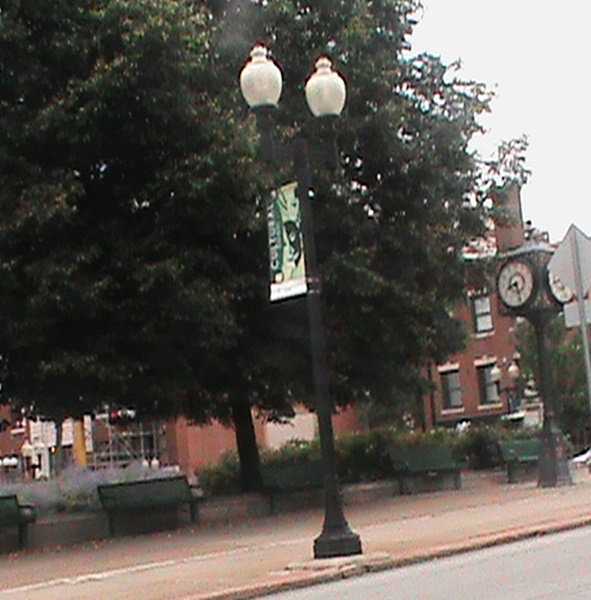
Near Main and Fourth Street


     Thanks for stopping by! I hope some of you learned something entertaining, yet valuable, especially persons not personally associated with this fascinating region. Positive comments or tidbits of information on specific subjects are always welcome and encouraged regardless of what area of history concerns you most. So, leave your feedback, and if you enjoyed the article in some form, PLEASE do consider leaving a word in the Comment Section!


Saturday, May 31, 2014

Whiskey Mania in Southwest Pennsylvania

                   The Whiskey Insurrection


  Also known as 'the Whiskey Rebellion'. Centered in southwestern Pennsylvania in the early 1790's, specifically 1794 and also with effects reverberating in other states of the new Union. An interesting time in our regional history that almost became a real powder keg. The main objective here is to give an accounting the principal theater and of the more prominent parties involved, along with a description of the basic timeline, as it played itself out.

   Early Factors

  According to A Department of the Interior article, 'Whiskey Rebellion Resources in Western Pennsylvania' for the National Register of Historic Places of 1992-
  "through the 1780's the median cleared acreage per farm was 20 acres for subsistence level. By the 1790's the size of land ownership had dropped off and many settlers were landless. (Isaac Meason owned a whopping 3200 acres and has 17 horses)...roughly 40% of the absentee landlords were from outside the western regions"...John Neville, the Supervisor of Collection of the excise tax, not an envious position, was, oddly enough, also a distiller and had 1000 acres south of Pittsburgh; his house and barns were destroyed by fire in 1794, by the rioters.

  To paraphrase a bit, rye as well as wheat were probably easier to grow than oats and barley; there were a lot of stills, many times referred to as distilleries in the Mon/Yough areas, with nearly 800 in Southwestern PA alone. Roughly stated, one fourth of the rebellious owned one. "For a period of about 6 weeks there many tar and featherings"...further exacerbated by the previous PA, VA rivalries and factions; "The Baptist and Calvinist elements were in the forefront to protecting hard won freedom toward their rights and their beliefs as well"
.
   The colonists and frontiersmen were fresh on the heels of the dreaded crisis of the enacting of the Stamp Act of 1765 and the near uprising caused by that law. Between the support gained by the French Revolution, resentment of depredations perceived as encroachments by the Indians; the lack of good markets and the attitude back east, and in the halls of justice, the fear of Washington, Adams and Jefferson, etc., that the new Constitution would be disobeyed publicly in a real test of the central government, this boiled up a heady mixture indeed.
 
   Much of the early hubris centered in Pittsburgh, Redstone and Hanna's Town, and included the wary constituents of the public officials who supported them with the backing of the regular militia. J. Smilie and W. Findley were two that were honed in on by A. Hamilton as defectors to the Federalist cause. April, 1793 saw the vehement Benjamin Wells have his office seriously attacked and ruined by protesters, and the year before in 1792, he was beaten by a man from Westmoreland County, one Philip Vigol.
  
    (History of Fayette County, Pennsylvania: with biographical sketches of many of its pioneers and prominent men
Author: Ellis, Franklin, 1828-1885
Collection: Historic Pittsburgh General Text Collection)

Disputed Land

  Compunding the tax situation, until 1781, the area of these lands were laid claim to as territory of Virginia.


    An examination about the old Yohogania County of Virginia would be in order.

    Created in a disputed area between Pennsylvania and Virginia in 1776, from the deeds of overlapping land grants long before the days of proper surveying, leading to much conflict between the states. Conflicts with Maryland had taken place and were considered resolved by the Proprietary Governor of the Province of Maryland, in 1767. The similar Yohogania County name was directly related, after all, to the Youghagenia area that now lies in southwestern PA. The two names are spelled and pronounced differently. The Virginia  territory was as far north as to claim Hanna's Town and the Fort Pitt area at the forks of the Ohio. The bounds of both claims included almost the entire southwestern corner of what is now Pennsylvania, west of the Laurel Ridge, (Allegheny Mountains), and south of the rivers of Kiskiminetas, and the Ohio and Allegheny rivers. (Courtesy of Wikipedia, with other sources included).No one actually disputed the claims of Pennsylvania, except at how far west the claim of the 5 degree line west of the Delaware really went. Following closely on the creation of Westmoreland, came the Earl, John Murray and 'Lord Dunmore's War'. In 1773 he appointed John Connolly Captain Commandant of Pittsburgh; nothing less! He was a nephew of George Croghan. Supposedly, with the help of outlaws like Simon Girty mentioned elsewhere, and with Virginian settlers, he took Pittsburgh in 1774, believing the area was part and parcel of West Augusta. Washington himself, once stated concerning him, "Nothing less than depriving him of life or liberty will secure peace for Virginia." It is interesting that Arthur St. Clair promptly had Connolly arrested for this act and jailed at Hanna's Town. By 1774 he was back in force after serving bail. The magistrates quickly wrote to complain to Governor Penn.

   It is claimed many Virginia settlers disliked the Pennsylvanian, especially the Quakers. Adopted resolutions were then sent to be heard at Pittsburgh where more outrages from the south took place also.. People were also ordered out of Redstone and other places. Connolly attempted to sell Pennsylvania land on the cheap and held courts here. Then came the creation of the Yohagania County situation, along with Ohio and Monongahela. Dunmore eventually reached Pittsburgh and stirred up the indians against the settlers and vice versa, complicating a difficult time so much the more.Then, with deliberation, Cornstalk, the chief of the Shawnee attacked Virginia. Later, John Neville took charge of Fort Pitt. Dr.Connolly was finally arrested at Fredericksburg, while Dunmore went to the English side during the Revolutionary War. This behavior ended up stiffening the backs of southwestern Pennsylvanians even more than many others against the British. It can be seen how politics, amid these simmering troubles, relate an undercurrent of distrust and varying loyalties with the attitudes of the colonists.

     We need also to keep in mind, Allegheny, Fayette, Greene and Washington Counties were all carved from the original boundaries of old Westmoreland County, which itself was, (legitimately),  created in the year 1773, to the east of Pittsburgh.

    The dispute was near the time of the capture of the Scotch-Irish "Hanna's Town" in Hempfield Township, founded in 1773. This area on Forbes Trail Road in Westmoreland County, is  maintained by the Westmoreland County Historical Society. A very important place historically and archeologically, near to modern day Greensburg which experienced serious armed conflict in 1774-1775. The tavern here was where the 'Hanna's Town Resolves' were written out a year before the famous 'Declaration of Independence'. Hanna's Town was then replaced, appropriately, by 'Newtown', or Greensburg, toward the south as the county seat on December 10. 1785, and the creation of it's court houses began. The town was ruined during the Revolutionary War by the British, (with the help of some notorious white outlaws of the ilk of Simon Girty, Alexander McKee and Matthew Elliott, according to History of Westmoreland County, Volume 1, Chapter 7). This was effected with their capable ally, the Seneca leader Guyasuta, (1725-1794), of Pontiac's Rebellion in 1782, though later their were attempts at rebuilding. It would be meaningful to go into more detail of the particulars, but that will have to wait until another post. Let's say, for now, there were violent acts experienced by the settlers over these tough issues.

   The Scotch-Irish in the area did have a real propensity toward strong independence from 1775 with the Transylvania colony and the attitude of state rights still paramount, with many of them claiming they deserved and expected recognition as the 14th state of 'Westylvania'. Meanwhile, the Hamilton led, anti-constitutionalists, insisted on lessening state rights in favor of a centralized bureaucracy. To explain all of the cultural, economic and political circumstances of the times would be beyond the scope of this article. What we will try to do here, is to examine the basic situation, strategically and some of the more prominent people and the areas involved, with concentration, chiefly, on Westmoreland and Fayette counties.


More Violence


     In chapter 15, on page 157 of the History of Westmoreland, "The Whiskey Insurrection" is a term which has been usually applied to a series of unusual and unlawful and violent acts committed (principally in 1794, but to some extent in previous years) by inhabitants of the counties of Washington, Allegheny, Westmoreland and Fayette. These illegal and insurrectionary acts embraced an armed resistance on several occasions to the execution of certain State and national laws imposing an excise tax on distilled spirits and stills used from the manufacture of such spirits, a measure that was generally and peculiarly obnoxious to the people of these counties, particularly because they regarded it as calculated to bear with especial and discriminating severity on the industries of this section as compared with other parts of this country'.

   He goes on to state that ' The first excise tax imposed on the province of Pennsylvania was that authorized in an act of Assembly passed March 16, 1684, entitled "Bill of Aid and Assistance of the Government." As it was found to be objectionable to the sense of the people, that part of the bill relating to the collection of excise duties was repealed soon afterwards, and no similar legislation was had for more than half a century.

   In 1738 the provincial Assembly passed "an act for laying an excise on wine, rum, brandy, and other spirits," but this... "was received with such unmistakable disfavor that it remained in force only a few months..." This was attempted again and at other times and places, "upon the inhabitants of the province of his Majesty", with, basically, the same results-outrage and threat of uprising. Eventually, the hard facts of the need for revenue for the Revolutionary War forced the new government to enact a tax that would be enforced as needed, by 1772, this was law.

   "After the close of the close of the Revolution, laws imposing excise duties on distilled spirits, remained on the Pennsylvania-statute books until 1791, but they were not generally enforced, and they were exceedingly unpopular, especially in the western and southwestern portions of the State'...Some of the grains were so much easier to transport east through conversion to whiskey that the tax was that much more heinous to those in the western regions than the east. This area had more distilleries than anywhere else and many of the populace was of Scotch-Irish descent and strongly supported the resistance to the earlier Stamp and Tea acts".

   It was widely known the adverse effects experienced by collecting officers when they attempted to collect. For example one excise officer experienced, "His Pistols, which he carried before him, taken and broken to pieces in his presence, his Commission and all his papers relating to his office torn and thrown in the mud, and he forced or made to stamp on them, and Imprecate curses on himself, ... they then cut off one half his hair, cued the other half on one side of his head, cut off the Cock of his Hat, ...this with many other marks of Ignominy they Imposed on him, and to which he was obliged to submit; and in the above plight they marched him amidst a Crowd from the frontiers of this County to Westmoreland County, calling at all the Still Houses in their way," etc.

  At one point, Bradford, of the Washington County area, pushed the idea for going as far as to attacking the homes of those that supported the tax in Pittsburgh. Brackenridge's views prevailed, in that the rebels only marched through the city and later, disbanded without any real violence.

Brief Explanation of the Political Situation

  If, by chance, this subject comes across as 'too stuffy' to some, please feel free to skip down a few paragraphs.

  This was just the beginning of troubles for the state, partly thanks to the persistence of the Secretary of the Treasury, Alexander Hamilton against 'Tom the Tinker'. This was also complicated  by the British favored politics of the Federalists and the French favoring Democratic-Republicans of the Jeffersonians. It should be remembered, Hamilton, along with John Jay and John Adams, wrote many of the 85 essays, (under aliases), of the "Federalist Papers". They can be read here ,(feder16.txt), a part of Project Gutenberg. These were mainly written in response to the "Anti-Federalist Papers", with writings by Patrick Henry, 'Cato' and 'Brutus', with James Madison and Thomas Jefferson. Much of the friction took hold beginning with the Jay Treaty, which Washington himself supported. Yet, the early formation of the two party system was disagreeable to our first President, who tried hard to appear neutral at all costs, believing, perhaps wisely, seen in hind sight, this would bring favoritism and too much influence to bear on republicanism in many ways.

 Canonsburg. in Washington County, became a major area of foment, many supposedly meeting at the Black Horse Tavern of Henry Westbay. The area had lots of skirmishes and minor battles with the Indians and the British, being so long a part of Virginia and close to eastern Ohio. Colonel John Canon, was known to become upset when, along with others like, James Marshall, David Bradford and Thomas Speer, they diverted the Pittsburgh mail and found letters between Morgan, Neville, Governor Mifflin, and Thomas Butler discussing strategies and the military implications of the radicals.


Black Horse Tavern, courtesy of Wikimedia Commons


  Gallatin


   William Findely, John Smilie, his son Robert, and Albert Gallatin, no less, closely involved in Westmoreland and Fayette counties, were strongly opposed to the new laws and had said so. Washington made it known that he very much resented this as a 'daring and unwarrantable spirit', in his words. Gallatin, himself did become more moderate in his feelings over time, along with Jefferson and Madison. He became outspoken, famously, in a meeting at 'Whiskey Point', near the Monongahela River not far from Bower Hill. Though his political career began with election in 1790 by his peers as clearly sympathetic to there views, his oratory was firm in denouncing outright violence in the cause, yet was in a minority opinion in this stand. He still had an important influence, after all, he was very influential and held much more land and financial wealth than others.

   Firmly ensconced at Friendship Hill, he helped raise funds for the government to pursue the development of the National Road becoming a reality. From the 1780's to 1825 he lived here in the region and his force and wisdom held sway. Hamilton was particularly suspicious of him as to his Swiss-French ancestry and pushed to disallow his legitimate election on grounds that he wasn't naturalized for nine years and should not sit in the legislature. Being a major opponent in some circles of congress, he may well of held a special dislike toward his position, and maybe vice versa, as well.

    With the more moderate views of Jefferson, he became his Secretary of the Treasury, no less. There was much friction between them and eventually Jefferson did resign before being dismissed, it was that heated. Washington felt strongly that Jefferson had betrayed his allegiance to his office.
     ( http://explorepahistory.com/citation.php?citeId=1-3-68A)

   "This rebellious sentiment was so wide-spread, so unmistakable in its character, and indicated by such open threats of violence to any officers that might be hardy enough to attempt the collection of the excise duty, that it became difficult to find any proper person willing to take the risk of accepting the office of chief inspector of the Western District."

  Looming Troubles

   Yes, there was the spectre of blackened faces, tar and featherings, liberty poles with militia dressed like Indians, and effigies burnt, reminding officials of Bostonian confrontations not so many years ago, and this must of influenced them in an unusual way, so that Washington introduced legislation to ban any extra-legal meetings that would be controversial to the national government and what they felt was the public good. Though Albert Gallatin pressed for less violence and more reason at a meeting in Uniontown, by the summer of 1794 the protest was in full force with U. S. Marshall David Lennox entering the fray from Philadelphia to serve papers for court trials on prominent rebellious distillers. Neville was allowed to retreat to Pittsburgh, the only city with any real eastern elite sympathies. This saw the creation of John McDonald's 'Mingo Creek Democratic Society' of Washington County. Exciser John Lynn was famously tarred and feathered and then his house attacked in Canonsburg, Greene County.

    In Allegheny County, Neville, who had fought in Lord Dunmore's War in 1774, and in various campaigns in the Revolution, opened fire on a group of 100 at Bower Hill, Scott Township, now off of Interstate 79. They proceeded to burn down his house for such force shown in opposition. James McFarlane returned to find Neville with about 600 rebels to attack them, but he, himself was shot on offer of a parley, or so it was said. Oliver Miller and James McFarlane were both killed.

   Washington and Hamilton together had eventually come as far west as the Espy House in Bedford to meet the troops and thus, made it his temporary headquarters.

   Deputy Attorney General of Washington County, David Bradford, fueled the flames as leader of the rebels, urging succession from the Union, eventually having to flee his house and most possessions for the south and Louisiana to hide out. He was never pardoned. He was also the leader in the meeting at Bonnet Tavern in Bedford, (Raystown).

   Benjamin Wells House In Connellsville

   The burning of the house of Benjamin Wells in Connellsville, at the intersection of North 7th and 8th Street, which sits at Rt. 119, is worthy of a photo:

  
courtesy of www.waymark.com


    This happened in April of 1793. His house was ..."visited in the night by these rioters, who, having forced an entrance and finding that Wells was absent, contented themselves with terrifying and abusing his family...On the night of November 22, 1793, a second attack was made on the house of Wells. The insurrectionists again entered the house by force, and demanded a surrender of the officer's commission and official books, and upon his refusal they threatened him, with pistols pointed at his head, and swore that if he did not comply they would instantly put him to death... He did not resign however, and, about July 1, 1794, the rioter burned his house in his absence, captured him on his return, and again demanded that he resign his commission as collector and promise to accept no office under the excise laws in the future.

   These demands were made as the conditions on which his life and safety depended. He accepted them, submitted to all their requirements, upon which they desisted from all further ill treatment of him. He afterward removed to the Connellsville side of the river and established his residence there."
      (History of Bedford,Somerset and Fulton Counties, Pennsylvania, of 1884).

   Well's son John was attacked in East Huntington. Also, as the situation grew more and more out of control, Captain John Webster was ran out of town and humiliated near Stony Creek in Somerset, old Bedford county, by residents of Westmoreland, while at least 5,000 militia gathered at Braddock's Field to protest in earnest in August. While Hamilton fomented the trouble by writing cloaked letters stating it was tantamount to trying to overthrow the government, Hugh Brackenridge of Allegheny County tried to mediate, partial as he was with the 'Whiskey boys'. He found it a hard time doing so effectively, as did PA Governor Thomas Mifflin trying to reduce the urge for retaliation by the regular troops.

In Maryland, when they attempted to force a draft for military duty, the young men revolted and raised the red striped flag of Liberty or Death!

   Washington's Arrival and March


    The 'peace commissioner's' from Washington made the decision the army should be called out to rectify the rebellion without meeting with any PA representatives involved with the counties, considered by some factions as a knee jerk reaction. The PA Commissioner did meet with them at Brownsville to basically wave the white flag. PA eventually voted 34 to 23 for a reluctant submission. That was not thought good enough. So the troops came...as many as 12,000 men were raised from Maryland, PA, New Jersey and Virginia as George Washington, first President of the United States of America slowly marched to the west. temporarily deviating to Ft. Cumberland and then to Ft. Bedford before he personally made a return to Philadelphia, perhaps hesitant to risk the sight of possible heavy bloodshed.Meetings were held at many key places in the four counties to strongly reconsider their former radical stance. This they did, when the sixty township delegates, represented by Findley and Reddick returned from meeting with Washington in Carlisle. One example would be when they met in Greensburg with signatures of 420 fellow citizens, to "discountenance all illegal acts of violence from whatever motive."

   General Henry Lee, (the 3rd, known as  'Light-Horse Harry', father of Robert E. Lee), who personally held opinion against the tax, under orders had arrived at Pittsburgh and at Uniontown in early November. This almost immediately led to, what was after called, the 'Dreadful Night' of the 12th, rounding up 150 insurgents in the bargain. Daniel Morgan's men wintered at Harper's Ferry in case of more unrest. In the face of this major force, the delegates then carried the resolution to General Lee in Uniontown, the seat of Fayette County. 'Oaths of Allegiance' were soon reaffirmed at offices of the local Justices of the Peace. The rebellion had clearly taken a different and more peaceful course. With this turn of events, and the charge of treason had turned things completely around, the main opposition had ended. Most of the troops were then recalled from the area. On their way east they marched near Greensburg and were said to of camped within a few miles of Fort Ligonier, then crossing over Laurel Hill.


   Meanwhile, with a reference provided to me by Lannie Dietle, Alexander Hamilton wrote a letter to George Washington on November 3, 1794 from 'Cherry's Mill',(now Laurelville, straddling Bullskin and Mt. Pleasant townships at the bottom of the three mile hill), which states, "I have returned to this place from Union Town. A letter from Governor Lee which goes with this probably informs you of the plan of future operations-but lest it should not I shall briefly state it. The right wing is to take a position with its left towards Budds ferry & its right toward Greensburgh. The left wing is to be posted between the Youghagani & Monongalia." Hamilton's letter to Washington of September third indicates that one Caleb Mounts, son of Providence Mounts, (the man Mounts Creek is said to be named after), was clearly embroiled in this situation. This paragraph cited is very revealing as to the context, which states, "Caleb Mounts then a Captain since a Major of Militia stands charged before Isaac Meason and James Finley, Assistant Judges, by information upon Oath of Benjamin Wells, Collector of the Revenue and his Wife, with being of a party that broke into the House of the Said Collector sometime in April, 1793." We also discover Mounts was taken to Philadelphia and imprisoned for a time before the great pardon given by Washington to the rebels. It doesn't appear the infractions were held against him by most of the local people since he was promoted to a Major.

   The Federal troops also billeted, or quartered for a time in Youngstown, named after Alexander Young in 1815, at the Barrett Hotel, further up Rt. 982. As a curious aside, nearby Sugerbush Ridge carries the curious legend of a payroll cache of the Revolutionary-era that has, to this day, never been found. So, maybe we should go treasure hunting!


   It is fascinating to see the course taken by the units of the Army so near our region, and with the knowledge of the famous Secretary of State for the United States, Alexander Hamilton spending time embedded with the troops at Laurelville, basically between southeastern Westmoreland and northeast Fayette.
   Something must be said in Washington's favor, who should be considered a cautious man, he made certain he had received congressional approval in all things, quite unlike these modern times of Presidential 'Executive Orders'. He genuinely felt the need to make a display of mercy, that the new Republic was not an oppressor in the sense of a dictator or a King and did not enforce suppression of the citizens. Regardless, in upcoming trials the convicted, if they could be located, were referred to as 'malicious', 'wicked', and 'seditious' in what could be thought of as a taste of yellow journalism. Two were under death sentence, but were later pardoned as well. This had some effect on the local political power. Right or wrong, good or bad, the scene was engrained in the fabric of the towns and cities of southwestern Pennsylvania and thus the definition of treason was officially set for the congress and judiciary for the future of the country.

    You can read more of George Washington's thought's toward this time in history, as well as other important documents concerning him at this site of the University of Virginia here.

     It is probably surprising for most of us to read of the heavy turmoil the region was deeply involved in during the early years of it's riveting history. And no wonder.

     As material from the above monograph of the Dept. of the Interior clearly points out,

"The Federalist revolutionaries of 1776, now acting as conservatives, had taken the same position their British predecessors had, while the western rebels voiced the identical ideology and claims of self-interest that had been advanced by all segments of America in 1776."
 
    A very good point made.

   The Result:


   The dreaded excise tax, the subject of all this controversy and turmoil, was repealed in the next year.

   (some of the sources are The Philisophical Society and The Life of Albert Gallatin, 1943, and parts of History of Greene County, Pennsylvania. And also,  H.H. Brackenridge, 'Incidents of the Insurrection in the Western Parts of Pennsylvania in the Year 1794',John M'Culloch, Philadelphia; material also taken from, Libby, O. G. "Political Factions in Washington's Admninistration," NDQ: North Dakota Quarterly (1913)


   (Please let me know, if any errors are to found, I do make apologies and thank you for your patience. The material quoted is from sources believed by the writers to be genuine and factual. I take no other responsibility. Any mistakes should be incidental and will be glady and promptly corrected, if cited with proper reference as to authenticity). Thank you.
  

Contact Form

Name

Email *

Message *